The mando-bass, has 4 single strings, rather than double courses, and it is tuned like a double bass. These were made by the Gibson company in the early twentieth century, but appear to have never been common. Most of the mandolin orchestras will prefer to use the ordinary double bass, rather than a specialized mandolin family instrument.
The piccolo or sopranino mandolin is a rare member of the mandolin family, tuned one octave above the tenor mandola and one fourth above the mandolin; the same relation as that of the piccolo or sopranino violin to the violin and viola. The instrument scale length is typically about 9.5 inches (240 mm).
Showing posts with label Sell. Show all posts
Showing posts with label Sell. Show all posts
Monday, June 30, 2008

Friday, May 30, 2008
Learn How to Easily Read Guitar Tabs
With all those technical quarter notes and treble clefs, who really has time to learn guitar chords and riffs without spending days, weeks or even months taking private music lessons? Music notation is intimidating, but there is a simple solution to the problem – guitar tablature. Known as tab to professional musicians, it is almost like a diagram that shows guitarists exactly where to place their fingers. Tab presents amateurs and professionals alike with an easy way to learn new guitar chords or even a complete song. Let’s break down the basics.
Where to begin with guitar tabs
Think of it this way - if you can read a map, then you can also learn guitar chords from tab. Tab consists of six horizontal lines, representing the strings of the guitar (similar to a guitar chord chart, only sideways). The low E string is represented by the bottom line, and the other strings follow in succession the highest E. Players simply follow symbols on the lines indicating what string should be pushed, and in what location (fret). For example, if the number one appears on the top line, it indicates that a finger should be placed on the highest guitar string, in the first fret. When multiple numbers appear simultaneously, it indicates that certain strings should be pushed at the same time, in the fret indicated by the numbers provided.
Taking guitar tabs to the next musical level
Most tab will indicate the chord symbol above the lines and fret numbers, so that more advanced players can read along with what they already know. Advanced tab notation may consist of complex instructions from the author. For example, sometimes a guitarist will slap their finger down forcefully on top of a string, creating a different sound. This technique, known as a hammer-on, is often indicated by appearance of the letter h in tab.
Unfortunately, tab does not have a set of standardized rules, and there are many variations. There is also little direction for rhythm and timing, but it will work well for musicians who have a good ear, and a preexisting idea about how something is supposed to sound before they play it. It is best to start by picking out a well known, simple folk melody that is easily identifiable, and then move on to more complex patterns including chords and riffs.
Guitar tabs for every musician
Tab is not only an excellent way to learn new guitar chords; it is also used to notate scales, riffs, or entire songs. Guitarists who wish to try their hand with classical pieces, but do not read standard notation can experience the joy of tackling and mastering challenging pieces. Many publishers create albums of classical pieces which include standard notation, chords, and tab. Every genre is available in tab on the Internet or for purchase in a music store.
One of the greatest aspects of tab is that once you learn how to read it, the notation can be applied to many stringed instruments like the mandolin or bass. The possibilities for a blossoming musician are endless with this simple system. From chord charts to power ballads and sonatas, tab will expand your repertoire to include an unlimited number of pieces.
For advice on how to select the perfect drum set, cymbal, conga, bongos, djembe, acoustic guitar, electric guitar or other musical product, please see our Buyer's Guide and Advice pages.
Where to begin with guitar tabs
Think of it this way - if you can read a map, then you can also learn guitar chords from tab. Tab consists of six horizontal lines, representing the strings of the guitar (similar to a guitar chord chart, only sideways). The low E string is represented by the bottom line, and the other strings follow in succession the highest E. Players simply follow symbols on the lines indicating what string should be pushed, and in what location (fret). For example, if the number one appears on the top line, it indicates that a finger should be placed on the highest guitar string, in the first fret. When multiple numbers appear simultaneously, it indicates that certain strings should be pushed at the same time, in the fret indicated by the numbers provided.
Taking guitar tabs to the next musical level
Most tab will indicate the chord symbol above the lines and fret numbers, so that more advanced players can read along with what they already know. Advanced tab notation may consist of complex instructions from the author. For example, sometimes a guitarist will slap their finger down forcefully on top of a string, creating a different sound. This technique, known as a hammer-on, is often indicated by appearance of the letter h in tab.
Unfortunately, tab does not have a set of standardized rules, and there are many variations. There is also little direction for rhythm and timing, but it will work well for musicians who have a good ear, and a preexisting idea about how something is supposed to sound before they play it. It is best to start by picking out a well known, simple folk melody that is easily identifiable, and then move on to more complex patterns including chords and riffs.
Guitar tabs for every musician
Tab is not only an excellent way to learn new guitar chords; it is also used to notate scales, riffs, or entire songs. Guitarists who wish to try their hand with classical pieces, but do not read standard notation can experience the joy of tackling and mastering challenging pieces. Many publishers create albums of classical pieces which include standard notation, chords, and tab. Every genre is available in tab on the Internet or for purchase in a music store.
One of the greatest aspects of tab is that once you learn how to read it, the notation can be applied to many stringed instruments like the mandolin or bass. The possibilities for a blossoming musician are endless with this simple system. From chord charts to power ballads and sonatas, tab will expand your repertoire to include an unlimited number of pieces.
For advice on how to select the perfect drum set, cymbal, conga, bongos, djembe, acoustic guitar, electric guitar or other musical product, please see our Buyer's Guide and Advice pages.
Tuesday, May 27, 2008
Learn To Play Musical Instrument
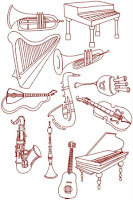
If you want to learn a musical instrument, you are in luck. There is a vast variety of musical instruments which can be learned easily and at low cost with the help of the scores of music instruments available. However, if you are a beginner, you may get confused by the array of choices. You may worry about which instrument to choose, how much time the lessons will take, the costs and many other factors. This article will guide you on the correct selection of the instrument so that you may not have to regret your choice later.
First of all consider your interest which is of course what will keep you to the end of the lessons. Unless you are interested in the instrument you are trying to learn, you will never really master it. So think about the type of music and instrument you like. Check out different options and pick the one you feel is best for you.
Next point to consider is the cost. It is possible that the music you want to learn is too costly for you. May be the instrument costs a ton or the tuitions are too expensive. Thus, try to select one that suits your budget. Also, consider taking tuitions that are offered in groups in order to reduce costs. If money is not a factor, you could opt for private tuitions that can offer you a lot of flexibility in timings.
Another thing to consider is the amount of time the lessons take. If you have a time crunch or are not a patient sort, you may not be able to finish learning a difficult musical instrument. There is no short cut to learning music. You may have to work very hard to be able to understand and work with any new instrument.
You must be really involved in the training and be enthusiastic. You may not grasp the ABCs of the musical instrument immediately, so you need to be patient. Also, expose yourself to a lot of recordings by good players. You could also do the home recording of your own music to check on your progress.
An important point could be the physical restrictions that certain musical instruments pose. If you are small, you may find certain musical instruments too heavy. Also, certain instruments require longer fingers or other such natural characteristics. Usually, the music teacher will be able to judge and guide you on proper selection. You could also borrow an instrument from an acquaintance to check how well you could do with it.
Monday, May 19, 2008
Know Your Pearl Drums Better
Drums are one of the most popular of musical instruments. Drummers all over the world have been making the effort to create a drum set that would truly suit the appetite of music lovers all over the world. One of the primary characteristics of a drum is that it can produce indefinite low and high-pitched sounds constantly.
Pearl rock was based on anti-establishment rock music genre in the mid 70s,The pearl drummers made a name for them with playing with the shorter version of the rock. The right pearl drum kit gear depends on features like playing style, personal penchant, monetary funds, and moving options of the drummer. The hardware part was constituted by the cymbals and tom-tom stands and was considered an integrated part of the base drum kit. Drums and cymbals are considered the breakable part of the collection as it goes through rigorous wear and tear.
One or two electric guitars, an electric bass, a drum kit, the vocals constitute the distinctive punk rock instrumentation. During the mid 1970s people who did not have too much ability in music tried to express themselves through the new form of rock music. The anti institutional based drumming was quick to catch the attention of the public.
Punk drummers like to change their tuning with particular music intervals. This makes the distance between the tuned notes of one drum with the other consistent. As it is not based on any chromatic notes so the punk drummers can have any start point with the punk drums. Although there are many tuning opinions, the bulk of them revolve around the major chords. In addition, the time factor for the whole music length was shorter than the regular rock so the start with the punk drums was fast.
A drum key or a similar kind of device is used to tune the drum set. The tension of a drumhead is changed to tune it. The difference in tuning between same elements of a drum kit and other percussion element is quite significant. Punk drums are no different.
Alternating with the hi-hat cymbals will help you keep the speed but make sure you are not changing the beats. You can create interesting fills with fast music. Listening to good drummers will help you in building your own creative ways. One of the chief ingredients of the punk music is energy, so beating the punk drums with vigor would help in being attuned with the speed of the music.
Live Music - Browse the LMFM listings and check out featured artists, live gig reviews and recommended live bands and artists playing near you in the UK and Ireland.
Pearl rock was based on anti-establishment rock music genre in the mid 70s,The pearl drummers made a name for them with playing with the shorter version of the rock. The right pearl drum kit gear depends on features like playing style, personal penchant, monetary funds, and moving options of the drummer. The hardware part was constituted by the cymbals and tom-tom stands and was considered an integrated part of the base drum kit. Drums and cymbals are considered the breakable part of the collection as it goes through rigorous wear and tear.
One or two electric guitars, an electric bass, a drum kit, the vocals constitute the distinctive punk rock instrumentation. During the mid 1970s people who did not have too much ability in music tried to express themselves through the new form of rock music. The anti institutional based drumming was quick to catch the attention of the public.
Punk drummers like to change their tuning with particular music intervals. This makes the distance between the tuned notes of one drum with the other consistent. As it is not based on any chromatic notes so the punk drummers can have any start point with the punk drums. Although there are many tuning opinions, the bulk of them revolve around the major chords. In addition, the time factor for the whole music length was shorter than the regular rock so the start with the punk drums was fast.
A drum key or a similar kind of device is used to tune the drum set. The tension of a drumhead is changed to tune it. The difference in tuning between same elements of a drum kit and other percussion element is quite significant. Punk drums are no different.
Alternating with the hi-hat cymbals will help you keep the speed but make sure you are not changing the beats. You can create interesting fills with fast music. Listening to good drummers will help you in building your own creative ways. One of the chief ingredients of the punk music is energy, so beating the punk drums with vigor would help in being attuned with the speed of the music.
Live Music - Browse the LMFM listings and check out featured artists, live gig reviews and recommended live bands and artists playing near you in the UK and Ireland.
Tuesday, April 1, 2008
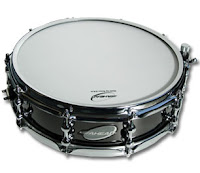
Snare Drum
Analog synthesizers have regained some degree of popularity in recent years, as electronic dance music has become more widespread and successful. Although analog technology has become replaced by cheaper digital modeling technology with more features, the goal of VA (virtual analog) synthesis is to be able to recreate the warmth and nuances of the highly variable analog circuits of yesteryear. The ability of digital components to accurately model is the subject of great debate and beyond the scope of this article, but a general consensus is maintained that they are becoming more and more difficult to tell the difference between.
With that in mind, the assumptions that this article works under include the following: That you possess an analog or virtual analog synthesizer with at least one oscillator (VCO), a low pass filter with resonance (LPF) and key tracking (also called key follow on some models), one or more standard ADSR-type envelope generators (EG) that can be routed to affect amplitude, filter cutoff frequency, and preferably pitch, and a white noise source. Even with such a relatively limited palate of sound-sculpting tools, a large number of exciting sounds can be achieved.
Furthermore, these articles will make the following assumptions about the default settings (an initialized patch, if you will) of your synth in the interest of consistency. First, the oscillator footage (or octave) should be an intermediate setting (16' or 8'). The filter should be wide open (all the way up so as to let all sound pass through unaffected) with no resonance. The envelope(s) should have zero attack, decay, and relase with %100 sustain. With these parameters adjusted to the preceding values, most basic synth sounds can be easily realized.
In this article we will examine classic analog percussion sounds similar to the drum machines and synths of the 80's through modern techno and house music. Let's start with a basic snare-type sound. Use a relatively mellow waveform such as a triangle wave, blended with however much white noise is appropriate to your ears. The key here is to find a good ratio between the sound of the shell of a snare drum (the oscillator) and the crack of the "drum head," which is approximated with noise. Keep the filter open for now. Set the amp envelope to have zero attack and sustain and quick decay (a third or less) with a little bit of release. These parameters can be adjusted, depending on whether you are going for a more or less realistic sound.
This should put you comfortably within the realm of the classic Roland drum machines of the 80's, which used ringing oscillators excited by a noise source to achieve their classic sound. For a more Kraftwerk-esque thwipp-type snare, use the filter in conjuntion with an envelope with similar parameters to the amplifier EG. Set the filter cutoff frequency fairly low with resonance to taste (try at every setting, but watch your speakers and ears at high resonance settings!). Use a healthy amount of envelope modulation to keep the transient bright, with a more muted decay. Now you can make some sweet synth-pop snares.
Monday, March 17, 2008
Buying Music Gear for Home Studios
First of all you need to decide what kind of studio you want. There is a pro studio ideal for recording full bands. This kind of studio can deliver CD master recordings. The other is a project studio, which generally supports recording electronic synths, samplers and maybe a few live players when needed. The quality level meets TV and film standards.
Another form of studio is the home MIDI electronica mainly software studio with at least one or two mics. It could also be a demo or a song writing studio with mics or even just a little hobby studio, or just want to make music studio. All the above mentioned options can be accomplished but there are certain things you also need to look into really carefully before buying music gear.
Avoid buying the same feature over and over again on different pieces of music gear. You may only end up otherwise having a number of preamps, samplers and recorders that you cannot use and they are just an additional expenditure.
Do not buy Cubase and Sonar and try to get them to work together. Or get Sound Forge and Sonar, as these applications will not work at all on a Mac. Therefore, it is advisable to be well versed with the music gear before purchasing them.
The recorder you choose be it a multi track, computer sequencer, or MPC 4000 and MV8800 are the most far reaching decision you can make. But, you have to consider that choice carefully. It is advisable to learn one form and master it, and then you can resort considering buying them.
There are stores that offer 30 days return policy on music gear. This can also be a great idea that makes it real easy for you. Get it for trial and when you find it is perfect for you then only you can opt to buy.
Many people face a lot of difficulties with the software they buy because they do not understand or misread the recommended requirements to run the software. Never buy software if you cannot meet the stated requirements.
When buying a music gear try to stick to the companies that are supremely focused on your computer platform, your operating system and in some cases your motherboard and your CPU. Some soundcard drivers may refuse to work well with some chipsets on some motherboards.
Do a thorough research before buying music gear. Ask questions from your dealer or you will end up spending extra for your digital mixer. Therefore, the price of a piece of gear, which is at a lower price, may mean spending another extra dollars to make it work.
Always buy the latest music gear to avoid future expenditure. Buy the cheaper or a secondary music gear now, and then it will be outdated in some years and you will have to buy the new one and this will cause unnecessary expenditure. It is best to wait a year or two after the release and then buy the finished, mature, stable products. Features may look good on paper but may not sound good in music. If you buy cheap music gear you may just end up buying again.
Besides the above mentioned tips of buying music gear, there are other variables you need to look into, like the cost of service, the upgrades, software and many more. Above all, the bottom line is the sound that should be your prime concern. Focus on the sound coming out of the speakers. Great sound never goes out of style.
Another form of studio is the home MIDI electronica mainly software studio with at least one or two mics. It could also be a demo or a song writing studio with mics or even just a little hobby studio, or just want to make music studio. All the above mentioned options can be accomplished but there are certain things you also need to look into really carefully before buying music gear.
Avoid buying the same feature over and over again on different pieces of music gear. You may only end up otherwise having a number of preamps, samplers and recorders that you cannot use and they are just an additional expenditure.
Do not buy Cubase and Sonar and try to get them to work together. Or get Sound Forge and Sonar, as these applications will not work at all on a Mac. Therefore, it is advisable to be well versed with the music gear before purchasing them.
The recorder you choose be it a multi track, computer sequencer, or MPC 4000 and MV8800 are the most far reaching decision you can make. But, you have to consider that choice carefully. It is advisable to learn one form and master it, and then you can resort considering buying them.
There are stores that offer 30 days return policy on music gear. This can also be a great idea that makes it real easy for you. Get it for trial and when you find it is perfect for you then only you can opt to buy.
Many people face a lot of difficulties with the software they buy because they do not understand or misread the recommended requirements to run the software. Never buy software if you cannot meet the stated requirements.
When buying a music gear try to stick to the companies that are supremely focused on your computer platform, your operating system and in some cases your motherboard and your CPU. Some soundcard drivers may refuse to work well with some chipsets on some motherboards.
Do a thorough research before buying music gear. Ask questions from your dealer or you will end up spending extra for your digital mixer. Therefore, the price of a piece of gear, which is at a lower price, may mean spending another extra dollars to make it work.
Always buy the latest music gear to avoid future expenditure. Buy the cheaper or a secondary music gear now, and then it will be outdated in some years and you will have to buy the new one and this will cause unnecessary expenditure. It is best to wait a year or two after the release and then buy the finished, mature, stable products. Features may look good on paper but may not sound good in music. If you buy cheap music gear you may just end up buying again.
Besides the above mentioned tips of buying music gear, there are other variables you need to look into, like the cost of service, the upgrades, software and many more. Above all, the bottom line is the sound that should be your prime concern. Focus on the sound coming out of the speakers. Great sound never goes out of style.
Wednesday, February 27, 2008
The Ipod Generations
For a better understanding about iPod generations, check the following:
On October 23, 2001, the first generation of iPod was released. The model name was iPod and had the storage capacity of 5 to 10 gb. It used FireWire connection to computers and it had a mechanical scroll wheel.
On July 17, 2002, the second generation of iPod was released. It had the storage capacity of 10, 20 gb. It used FireWire connection to computers and it had a touch-sensitive wheel. The Hold switch was revised. The FireWire port had a cover.
On April 28, 2003, the third generation of iPod was released. It had the storage capacity of 10, 15, 20, 30, 40 gb. It used FireWire connection to computers (USB for syncing only), and it had a central row of touch sensitive buttons. New backlit screen was introduced. Dock connector port was introduced.
On January 6, 2004, the first generation of iPod mini was released. It had the storage capacity of 4 gb. It used FireWire or USB connection to computers, and it introduced the "Click Wheel", which was later adopted by the fourth generation iPod. It was available in 5 colors.
On July 19, 2004, the fourth generation of iPod was released. It had the storage capacity of 20, 30, 40, 60 gb. It used FireWire or USB connection to computers, and buttons were integrated to form "Click Wheel". The monochrome model was replaced in June 2005 by the color display with photo viewer, which was introduced in October 2004.
On January 11, 2005, the first generation of iPod shuffle was released. It had the storage capacity of 512 mb, 1gb. It used USB connection to computers, and it had no screen, no click wheel. It used flash memory instead of hard drive storage.
On February 22, 2005, the second generation of iPod mini was released. It had the storage capacity of 4, 6 gb. It used FireWire or USB connection to computers , and it had longer battery life, and brighter color variants. Gold model discontinued. No AC adapter. The body color matched the click wheel lettering.
On September 7, 2005, the first generation of iPod nano was released. It had the storage capacity of 1, 2, 4 gb. It used USB connection to computers (FireWire for charging only), and it was the successor of iPod mini. Slimmer design, flash memory, color screen and lyrics support.
On October 12, 2005, the fifth generation of iPod was released. It had the storage capacity of 30, 60, 80 gb. It used USB connection to computers (FireWire for charging only), and it had large screen with video player and lyrics support. No AC adapter, Universal Dock, or A/V cables were included. It had black and white color variants. This model was revised in September 2006 (often called as generation 5.5) had a brighter display, a music search function, and a longer video battery life.
On September 12, 2006, the second generation of iPod shuffle was released. It had the storage capacity of 1 gb. It used USB (via dock only), and it had the aluminum case with smaller form factor. Built-in clip. Later multi-colored models were also released.
On September 12, 2006, the second generation of iPod nano was released. It had the storage capacity of 2, 4, 8 gb It used USB connection to computers (FireWire for charging only), and it had the anodized Aluminum case in 6 colors. Music search function, longer battery life, and brighter screen.
On October 23, 2001, the first generation of iPod was released. The model name was iPod and had the storage capacity of 5 to 10 gb. It used FireWire connection to computers and it had a mechanical scroll wheel.
On July 17, 2002, the second generation of iPod was released. It had the storage capacity of 10, 20 gb. It used FireWire connection to computers and it had a touch-sensitive wheel. The Hold switch was revised. The FireWire port had a cover.
On April 28, 2003, the third generation of iPod was released. It had the storage capacity of 10, 15, 20, 30, 40 gb. It used FireWire connection to computers (USB for syncing only), and it had a central row of touch sensitive buttons. New backlit screen was introduced. Dock connector port was introduced.
On January 6, 2004, the first generation of iPod mini was released. It had the storage capacity of 4 gb. It used FireWire or USB connection to computers, and it introduced the "Click Wheel", which was later adopted by the fourth generation iPod. It was available in 5 colors.
On July 19, 2004, the fourth generation of iPod was released. It had the storage capacity of 20, 30, 40, 60 gb. It used FireWire or USB connection to computers, and buttons were integrated to form "Click Wheel". The monochrome model was replaced in June 2005 by the color display with photo viewer, which was introduced in October 2004.
On January 11, 2005, the first generation of iPod shuffle was released. It had the storage capacity of 512 mb, 1gb. It used USB connection to computers, and it had no screen, no click wheel. It used flash memory instead of hard drive storage.
On February 22, 2005, the second generation of iPod mini was released. It had the storage capacity of 4, 6 gb. It used FireWire or USB connection to computers , and it had longer battery life, and brighter color variants. Gold model discontinued. No AC adapter. The body color matched the click wheel lettering.
On September 7, 2005, the first generation of iPod nano was released. It had the storage capacity of 1, 2, 4 gb. It used USB connection to computers (FireWire for charging only), and it was the successor of iPod mini. Slimmer design, flash memory, color screen and lyrics support.
On October 12, 2005, the fifth generation of iPod was released. It had the storage capacity of 30, 60, 80 gb. It used USB connection to computers (FireWire for charging only), and it had large screen with video player and lyrics support. No AC adapter, Universal Dock, or A/V cables were included. It had black and white color variants. This model was revised in September 2006 (often called as generation 5.5) had a brighter display, a music search function, and a longer video battery life.
On September 12, 2006, the second generation of iPod shuffle was released. It had the storage capacity of 1 gb. It used USB (via dock only), and it had the aluminum case with smaller form factor. Built-in clip. Later multi-colored models were also released.
On September 12, 2006, the second generation of iPod nano was released. It had the storage capacity of 2, 4, 8 gb It used USB connection to computers (FireWire for charging only), and it had the anodized Aluminum case in 6 colors. Music search function, longer battery life, and brighter screen.
Thursday, February 21, 2008
Online Guitar Guide
A guitar teacher is the classic way in which to learn guitar. A guitar teacher will either come to your home periodically or have you visit them in their home or classroom if they work at a school. But having a Guitar teacher can be very time consuming and Guitar lessons can be pricey but they can also be significantly beneficial for the student. A teacher can provide the level of motivation necessary in order to put in the long hours of practice. Because you are meeting with another person on a regular basis you become aware of the things expected from you and are more likely to deliver on those expectations. A guitar teacher will help you learn guitar by first teaching you finger placement and chord techniques before instructing you on basic songs. Once you master a few simple songs you will began to expand your technique from there.
Online Guitar Guides
Now with the growing market of technology available, there also exist videos and online courses completely devoted to those looking to learn to play guitar. These guides and DVDs can be very helpful and can be listened to at your convenience. Videos are exceptionally helpful as they are crafted after classroom lessons and can be played over and over again so that you can learn at your own pace.
Online guitar guides don’t cost as much as the neither guitar teacher, nor do you have to travel to the classroom or have someone come to your home. With guides you learn how to play the guitar at your own peace. This as an end result will make you a much better guitar player.
Learning Guitar tabulates can also be used to easily learn guitar. Guitar tabs are much like sheet music but they are for those who can not read notes. They take each song and break it down by finger placement so that beginners can learn how to play a song easily. Here’s a quick tip, when learning Guitar Tabs, just think of it just like being a piano tab. They read much in the same way.
Link Partners:- audio production school - audio production schools
Celebrity Informations - Mobile Country
Subscribe to:
Posts (Atom)